The Magic of Balinese Dance: A Cultural Guide

Bali Nusa Transport
Balinese dance is an ancient tradition that narrates the eternal battle between good and evil. Every finger movement and eye expression (seledet) has a meaning rooted in Hindu epics like the Ramayana and Mahabharata.
≡Jump to Section
1. The Trance of Kecak
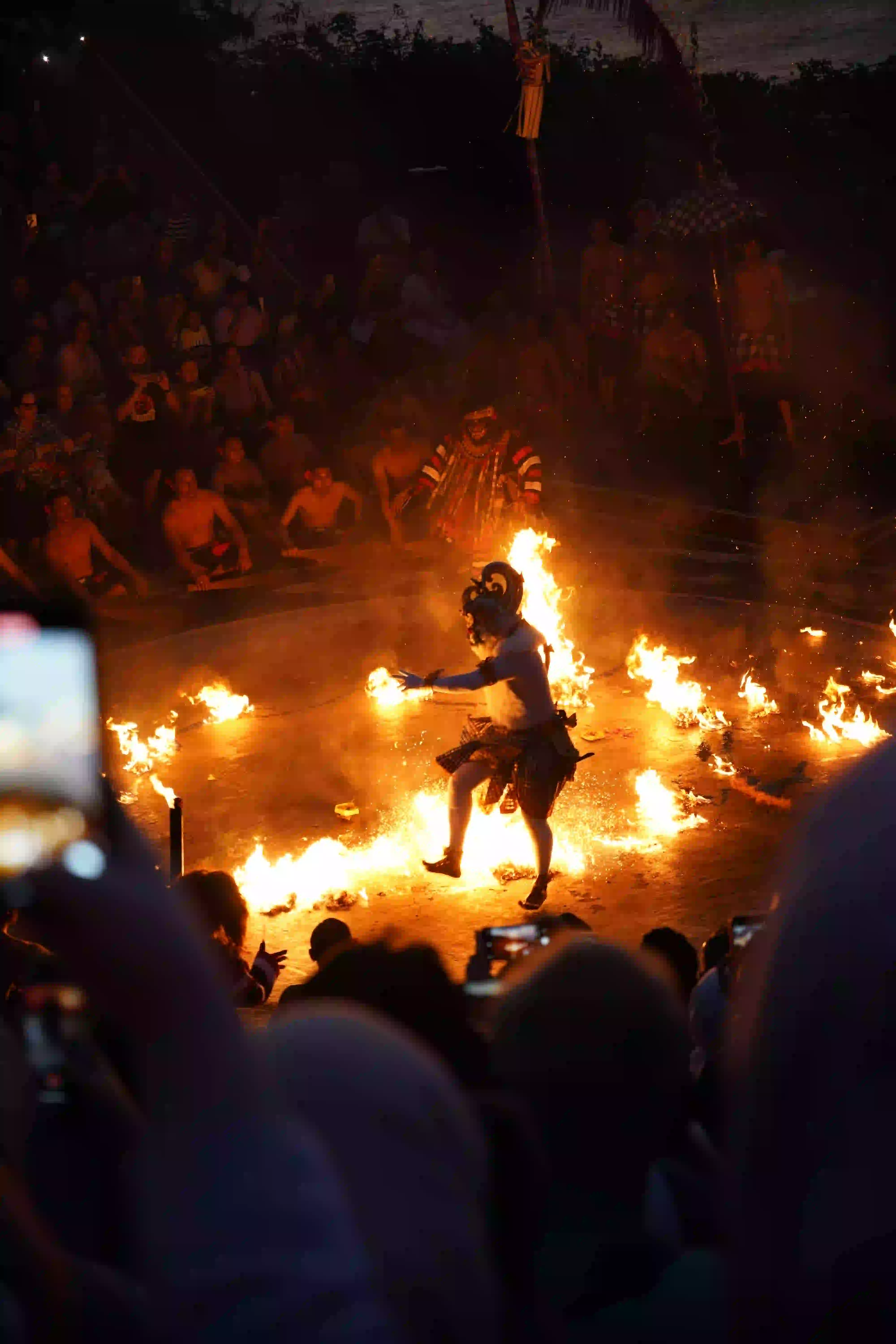
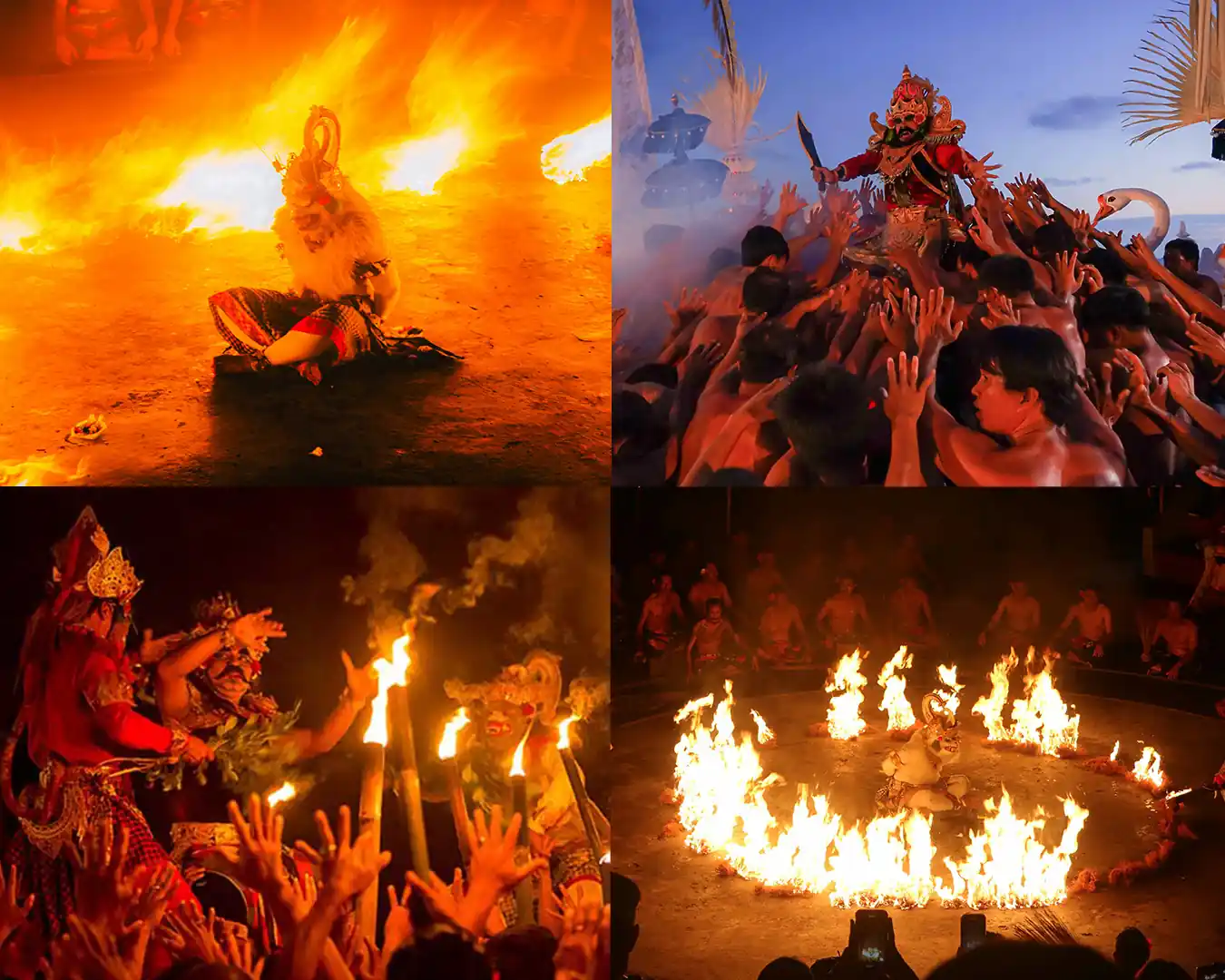
The Kecak Fire Dance is one of the most mesmerizing performance arts in the world, unique because it uses no musical instruments whatsoever. The entire musical accompaniment is generated by a human choir—concentric circles of 50 to 100 bare-chested men chanting 'cak-cak-cak' in complex, hypnotic rhythmic patterns that mimic not only the sound of gamelan but also the chatter of monkeys.
While the dance is a modern creation from the 1930s (a collaboration between Balinese artist Wayan Limbak and German painter Walter Spies), its roots go deep into ancient *Sanghyang* exorcism rituals. The dancers do not just sing; they sway their bodies and hands in unison, creating a wave of visual and auditory energy that puts the audience in a trance.
The narrative borrows episodes from the Ramayana epic, telling the story of the abduction of Goddess Shinta by the demon king Rahwana, and her rescue by Prince Rama aided by the white monkey army led by Hanuman. Drama, romance, and heroism are conveyed through expressive dance movements without any confusing dialogue.
The climax of the show typically involves Hanuman the White Monkey leaping through a ring of fire, or a battle scene where 'Sugriwa' and 'Subali' fight. This moment is highly interactive and often humorous, with Hanuman sometimes engaging directly with the audience.
The best place to witness this is at Uluwatu Temple during sunset. The combination of the twilight sky, the sheer cliffs dropping into the ocean, and the magical chanting creates an atmosphere that will give you goosebumps. The performance usually ends just as the sun vanishes, leaving you in darkness illuminated by resin torches.
2. Barong vs Rangda
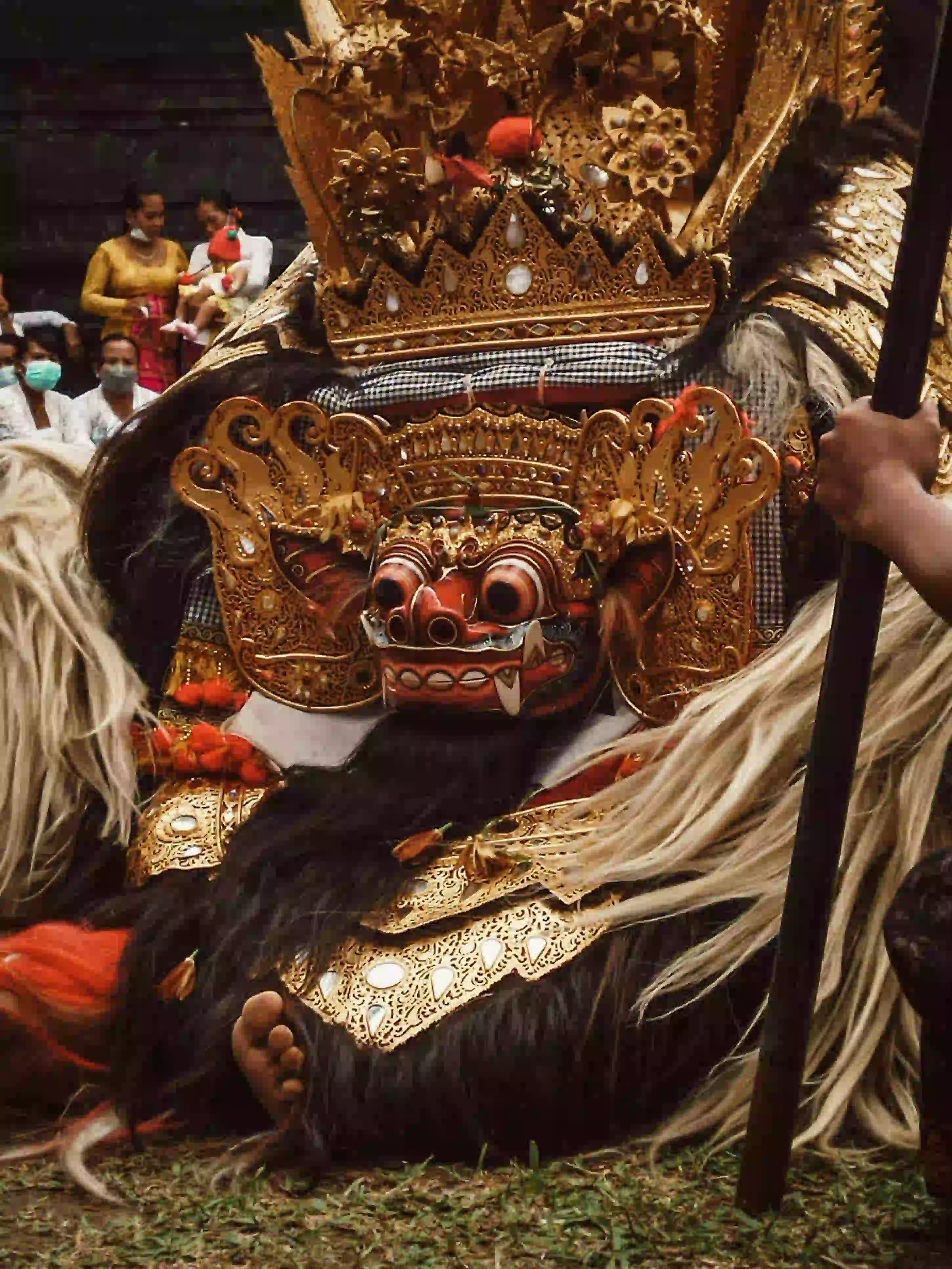
If Kecak is about epic storytelling, the Barong Dance is about deep philosophy. It symbolizes the concept of *Rwa Bhineda*—the eternal balance between good and evil, neither of which can ever truly vanquish the other. The Barong, a mythical lion-like creature with a shaggy coat and gold-ornamented mask, represents *Dharma* (order/good).
His adversary is Rangda, the terrifying Demon Queen with a long protruding tongue, fangs, and wild hair, representing *Adharma* (chaos/evil). Their battle is not about winning or losing but about maintaining cosmic equilibrium. This dance is typically performed in the morning in villages like Batubulan.
The most dramatic and tension-filled segment is the 'Kris Dance'. Followers of the Barong, under the spell of Rangda's black magic, fall into a deep trance and turn their sharp kris daggers against their own chests. However, thanks to the Barong's protective magic, their skin remains impenetrable. This is a display of real spiritual power, not just acting.
Behind the Barong costume are two highly skilled dancers—one controlling the head and front legs, the other the hind legs. They must move in perfect synchronization to bring the creature to life, giving it a personality that is at times playful, and at times majestic.
Watching the Barong gives you insight into how the Balinese view the world: that light and dark will always coexist, and humanity's duty is to keep harmony between them. The accompanying gamelan music is dynamic, shifting drastically to match the emotions of the scenes.
3. Legong Dance
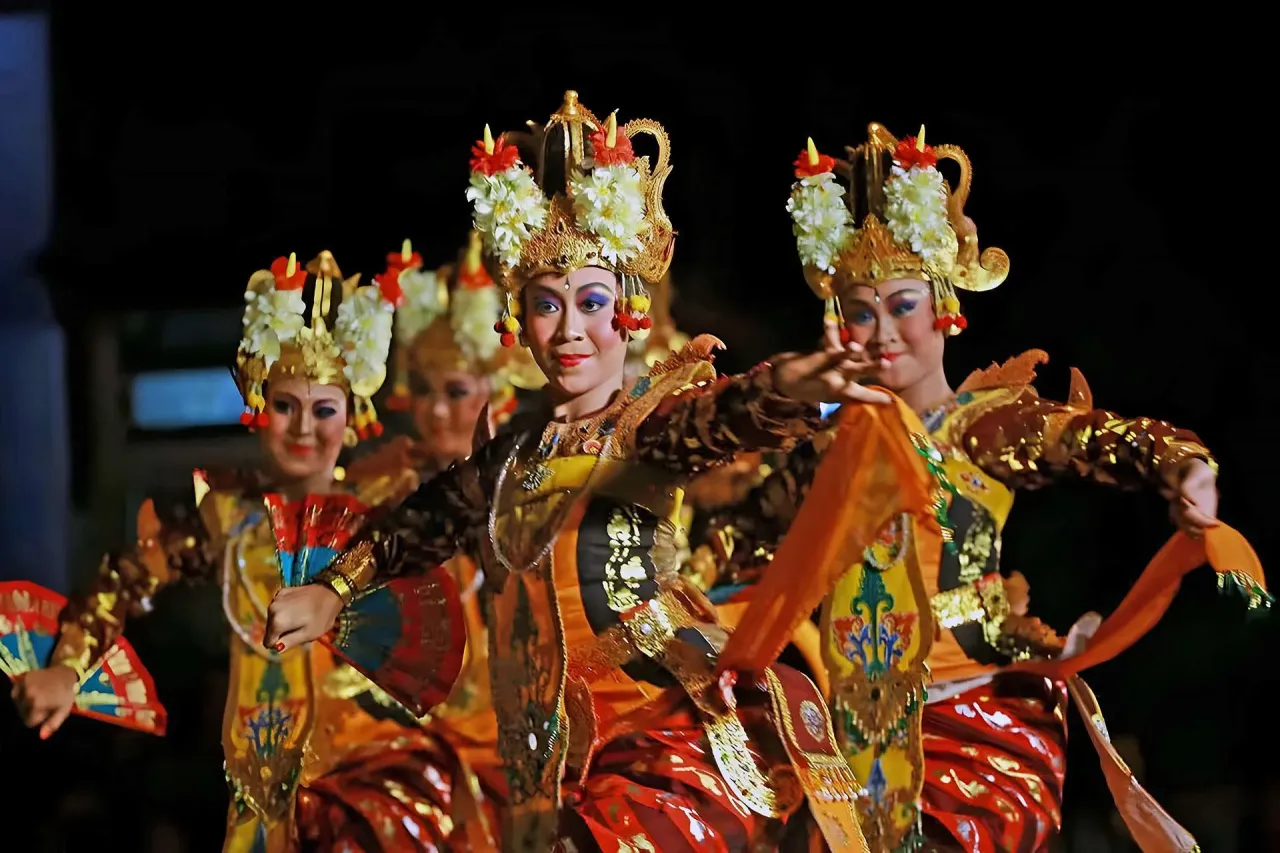
The Legong Dance is the epitome of feminine grace and refinement in Balinese court culture. Historically, this dance was performed exclusively within royal palace walls for the entertainment of kings. The dancers were young, pre-pubescent girls, chosen for their beauty and suppleness, bound in tight gold-gilded silk costumes and wearing swaying frangipani headdresses.
Technically, Legong is one of the most difficult dances to master. It is characterized by extreme finger movements where the digits curve backwards, a grounded yet dynamic stance, and most famously, the *Seledet*. Seledet is a sharp, rapid eye movement to the left and right, which must be perfectly synchronized with the accents of the gamelan music.
Legong does not tell a linear story like Kecak; it is more abstract or depicts fragments of the Panji romance cycles (ancient Javanese tales) or the legend of Lasem. The dance typically begins with a *Condong*, a lively palace attendant, followed by two identical Legong dancers who move like mirror images of each other.
The accompanying music, Gamelan Semar Pagulingan or Pelegongan, has a sweeter, more delicate tone compared to the explosive gamelan gong kebyar. Bamboo and bronze instruments blend to create intricate layers of sound that are as complex as the dancers' movements.
Though now performed for tourists at Ubud Palace or Peliatan, the aura of Legong's sacredness remains. Legend says the dance was born from a prince's dream of seeing celestial nymphs dancing in heaven. When you watch Legong, you are witnessing a human attempt to replicate that heavenly beauty.
Don't Get Soaked. Travel in Style!
Don't risk your safety on a slippery scooter. Enjoy Bali's tropical vibes comfortably with Bali Nusa Transport. Our fleet is ready to take you anywhere, rain or shine.