A Culinary Journey: 5 Must-Try Balinese Dishes

Bali Nusa Transport
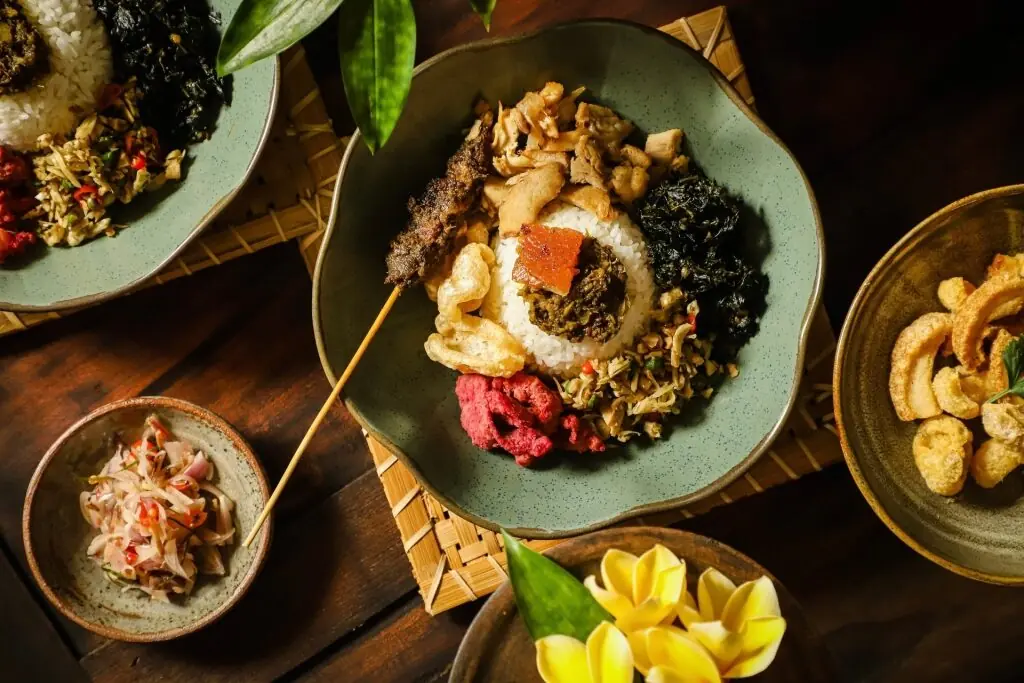
Balinese food is a festival of spices for the senses. Unlike other Indonesian cuisines, it uses a unique spice paste called 'Base Genep' which includes galangal, turmeric, ginger, and chilies. A true culinary journey in Bali goes beyond the restaurant; it's about tasting the culture itself. Here are the top dishes you cannot miss.
1. Babi Guling (Suckling Pig)
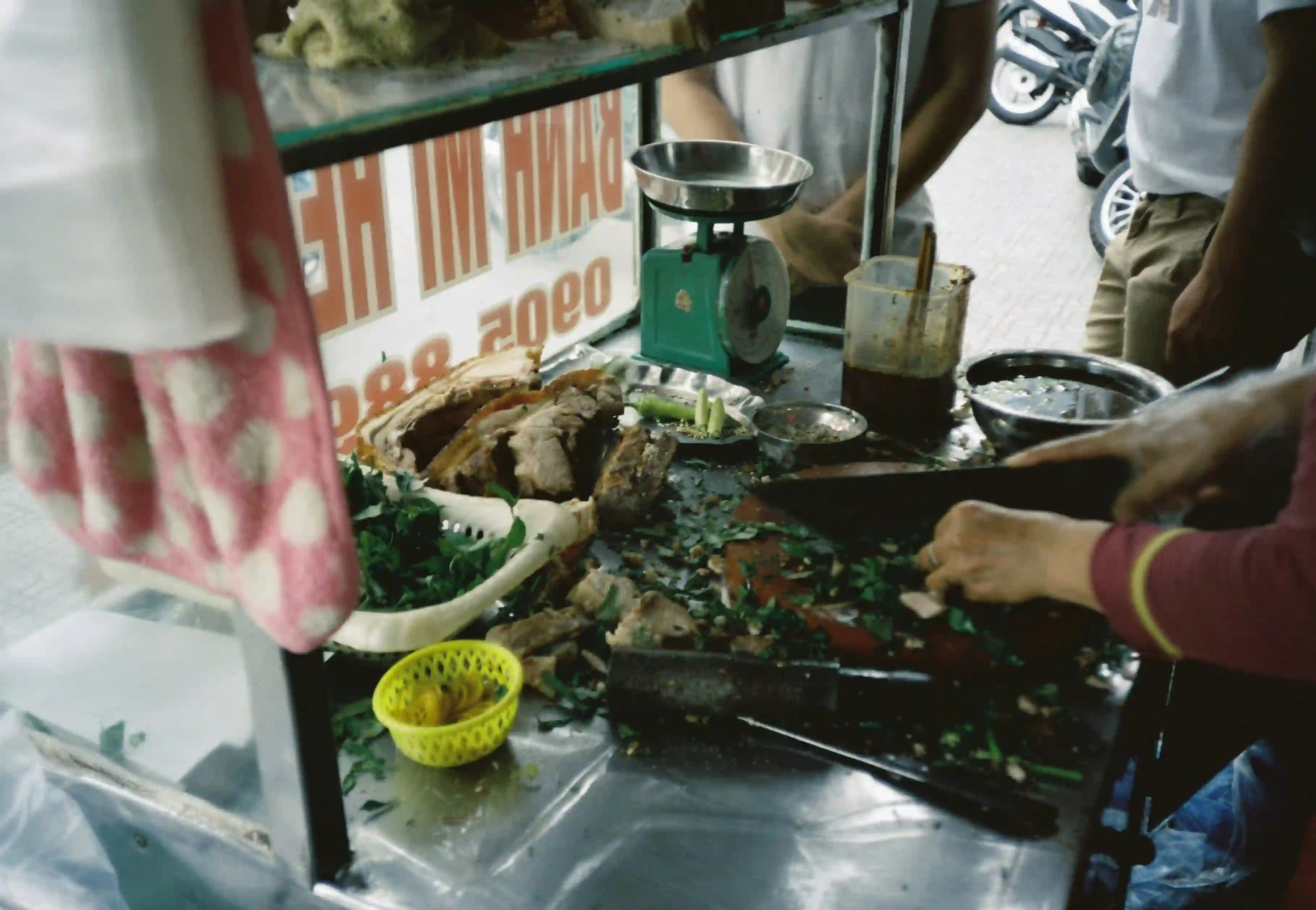
Babi Guling is not just food; it is Bali's most recognizable cultural icon. Historically, this dish was reserved strictly as an offering ('yadnya') during major ceremonies like Galungan. The pig symbolizes fertility and prosperity. However, over time, its irresistible flavor has made it a daily staple available at specialized warungs across the island.
The secret to its excellence lies in the intricate 'Base Genep' spice paste. The pig's cavity is washed with coconut water and then packed tight with a blend of turmeric, galangal, ginger, aromatic ginger (kencur), shallots, garlic, candlenut, chilies, and shrimp paste, plus salam leaves and lemongrass. The pig is then sewn shut to trap the aromatic steam inside, effectively pressure-cooking the meat from within while it roasts.
The roasting process is a test of patience. The pig is hand-turned over an open fire of dried coconut husks or coffee wood for 3 to 4 hours. The roast master ('penggoreng') periodically bastes the skin with coconut water and turmeric. This technique yields the dish's crown jewel: skin that transforms into a glass-like, golden-brown crackling that is shatteringly crisp yet not hard.
Ordering a portion of Nasi Babi Guling 'Special' guarantees an explosion of textures. Your plate will be piled high with warm white rice, juicy white meat, the prized crispy skin, 'urutan' (spicy Balinese blood sausage), 'gorengan' (crispy fried pork fat), and 'lawar' (minced meat mixed with vegetables and fresh coconut). It is almost always accompanied by a bowl of rich, spiced pork bone soup ('kuah balung') to cleanse the palate.
A tip for food hunters: Timing is everything. Babi Guling is best enjoyed between 11:00 AM and 12:30 PM, right after the morning roast is finished. As the afternoon wears on, the humidity softens the skin, and the best cuts sell out. Legendary spots like Ibu Oka (Ubud), Pak Malen (Seminyak), or Dobiel (Nusa Dua) are must-visits, but don't hesitate to try crowded local roadside warungs for a hidden gem experience.
2. Bebek Betutu (Slow Cooked Duck)
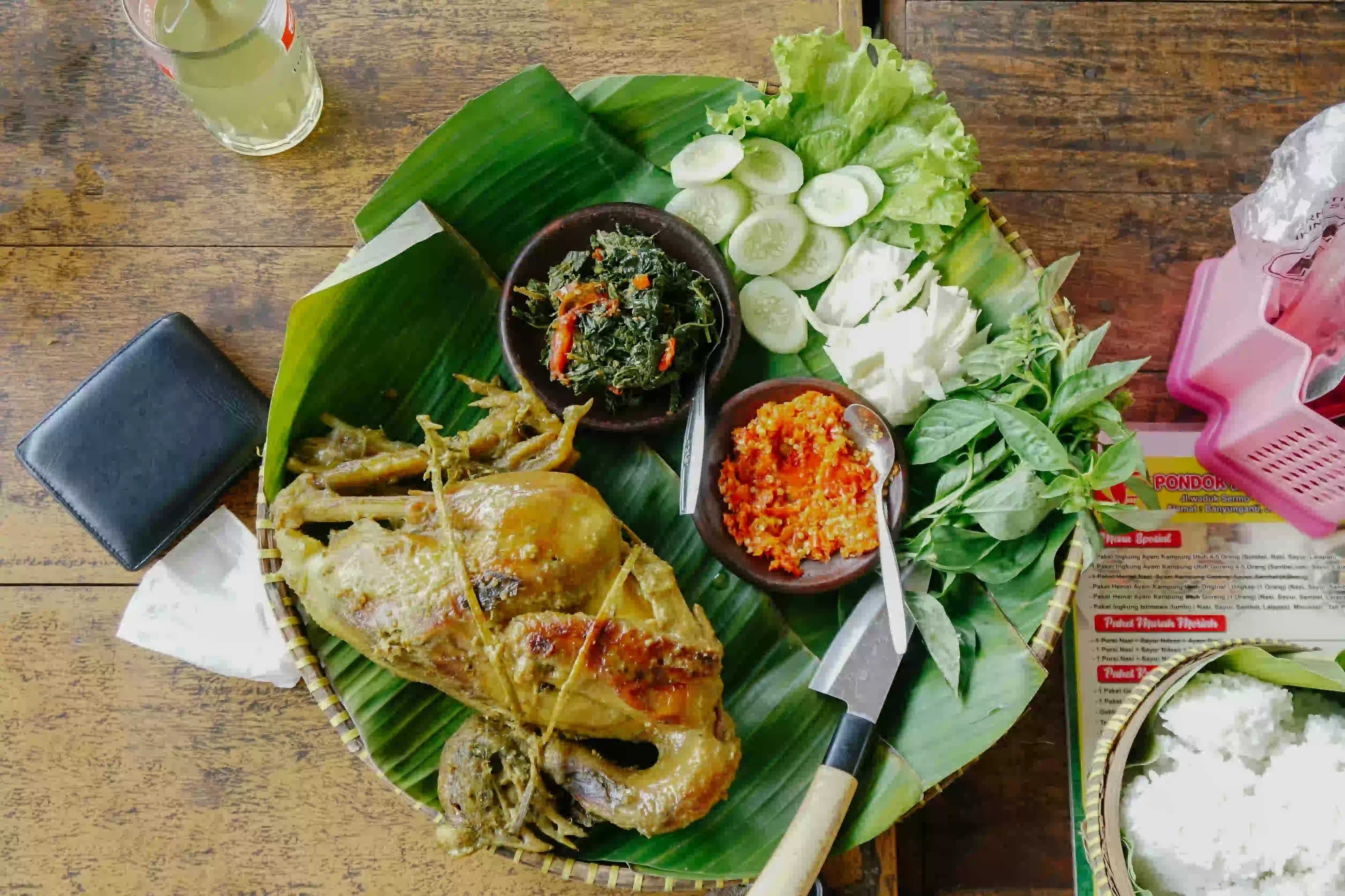
Bebek Betutu was a masterpiece of Balinese 'slow food' long before the term existed. 'Betutu' refers to the method of spicing and cooking meat (usually duck or chicken) in husks. In ancient times, this dish was a favorite of kings in Balinese palaces and a primary offering for 'Mecaru' ceremonies to maintain cosmic balance.
Preparation begins by massaging the duck with a pungent, spicy 'Base Genep' paste, often fortified with 'Base Wewangen' (aromatic spices) to neutralize any gamey odor. This marinade is not just rubbed on the outside but stuffed deep into the cavity along with cassava or papaya leaves, which help tenderize the meat from the inside.
The wrapping stage is crucial. The duck is tightly encased in multiple layers of 'upih' (dried areca nut bark) or old banana leaves. This bundle is then buried in a pit of earth and covered with hot coals and rice husks. The steady, low heat from the smoldering husks cooks the duck for 12 to 24 hours. This method allows the spices to penetrate all the way to the marrow.
When unwrapped, the aroma is incredibly complex: a mix of spices, earth smoke, and savory duck fat. The meat is so tender it can be pulled off the bone with just your fingers. The flavor is deep, earthy, mineral, and intensely spicy. It is typically served with rice, 'plecing kangkung' (spicy water spinach), and fried peanuts for crunch.
While Bebek Bengil in Ubud popularized the 'Crispy Fried Duck' version, the wet (Betutu Kuah) or dry-roasted (Betutu Bakar) versions are the true traditional forms. For the most authentic experience, seek out specialized restaurants in Gilimanuk or Gianyar where ancient family recipes are still strictly guarded.
3. Sate Lilit
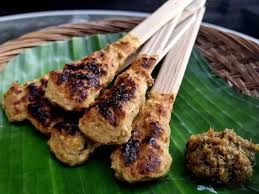
Sate Lilit is a symbol of unity in Balinese society. Unlike regular satay where meat chunks are separated on a skewer, Sate Lilit meat hugs the stick tightly, symbolizing inseparable togetherness. It is a staple of the 'Ngebat' tradition, where men gather early in the morning before a ceremony to mince meat and spice the satay together.
The primary ingredient is finely minced meat—most authentically Spanish Mackerel (Ikan Tenggiri) for its sticky texture, though chicken and pork are also common. This meat is kneaded with freshly grated young coconut (which adds sweetness and juiciness), thick coconut milk, lime juice, and the mandatory Base Genep spice mix.
The skewer itself is unique. Instead of thin sharp sticks, Sate Lilit uses broad, flat bamboo sticks or, even more traditionally, whole stalks of lemongrass. Using lemongrass is a stroke of genius: as it grills, the heat releases essential oils from the stalk, infusing the meat with a fresh citrus aroma from the inside out.
Grilled over coconut shell charcoal, Sate Lilit achieves a perfect flavor balance: savory from the fish, sweet from the coconut, warm heat from the spices, and a distinct smoky char. It cooks to a golden yellow hue rather than the dark brown of soy-marinated satays.
Sate Lilit needs no peanut sauce. Its flavor profile is so complex it stands alone, best enjoyed as is or with a side of 'Sambal Matah' (raw shallot, lemongrass, and chili relish). It is more than just a side dish; it is a favorite snack eaten anytime from breakfast to dinner.
Don't Get Soaked. Travel in Style!
Don't risk your safety on a slippery scooter. Enjoy Bali's tropical vibes comfortably with Bali Nusa Transport. Our fleet is ready to take you anywhere, rain or shine.