Bali Temple Etiquette: A Guide to Respectful Travel

Bali Nusa Transport
Bali is known as the Island of a Thousand Temples. These sacred sites are the heartbeat of Balinese culture. For visitors, entering a temple is a privilege that comes with vital responsibilities. Understanding standard etiquette not only avoids offense but deepens your connection to the spiritual experience.
≡Jump to Section
1. The Sarong & Sash: Non-Negotiable
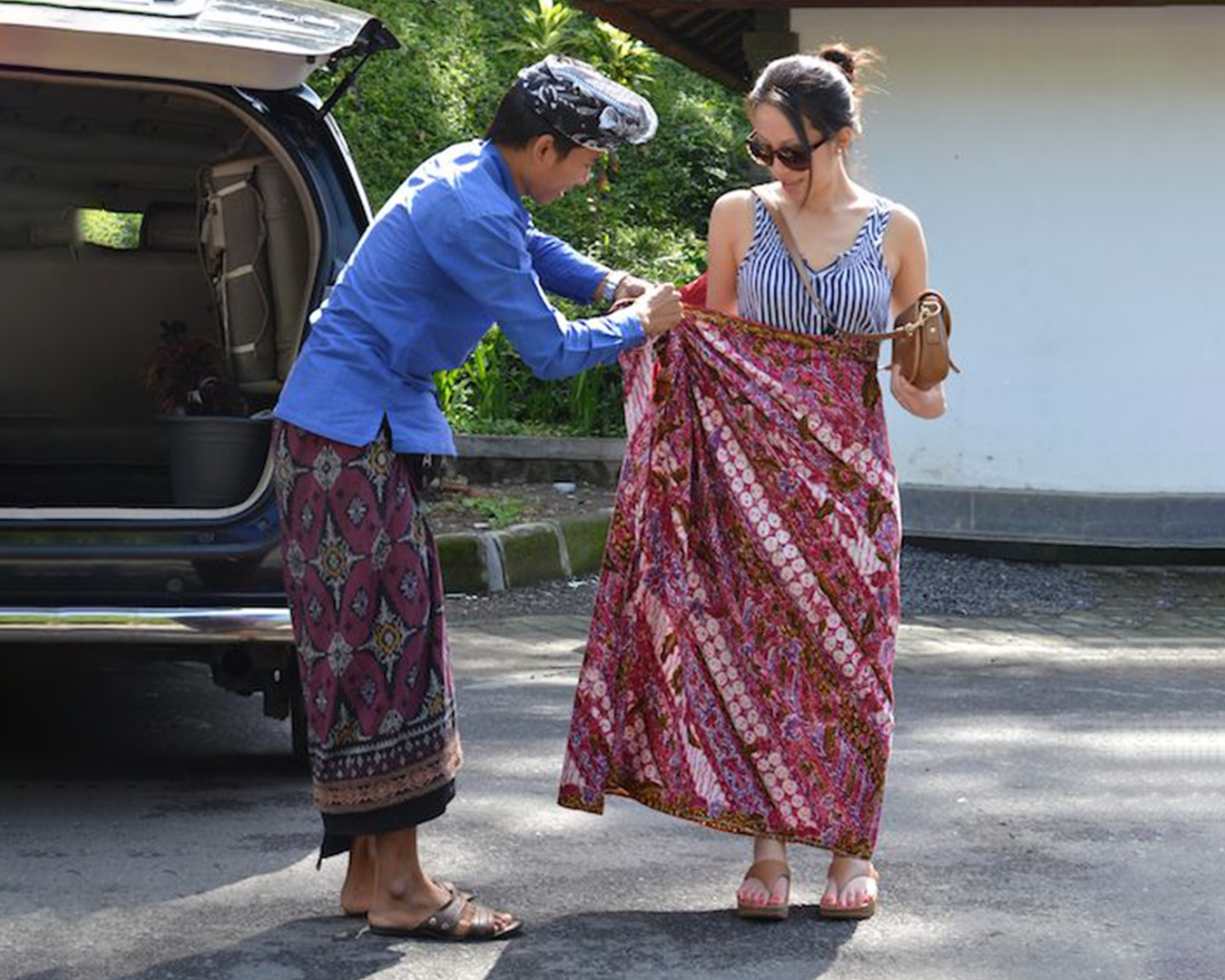
The most visible rule of Balinese temples is the dress code. No matter your gender, you must wear a 'Kamen' (sarong) that covers your legs down to the ankles. This is tied around the waist and secured with a 'Selendang' (sash). The sash represents the separation between your lower instincts and your higher spiritual mind, a symbolic binding of the ego before entering holy ground.
Shorts, mini-skirts, or even long dresses with high slits are not acceptable without a sarong over them. Even if you are wearing long trousers, it is respectful and often required to wear a sash around your waist. Most major temples like Besakih or Uluwatu afford sarong rentals included in your ticket price, but having your own is a sign of respect.
Upper body attire matters too. Shoulders must be covered. Tank tops, bikini tops, or shirtless walking is a major offense. A simple t-shirt, blouse, or a light shawl draped over your shoulders meets the requirement. The goal is modesty; you are visiting the home of the gods, not a beach club.
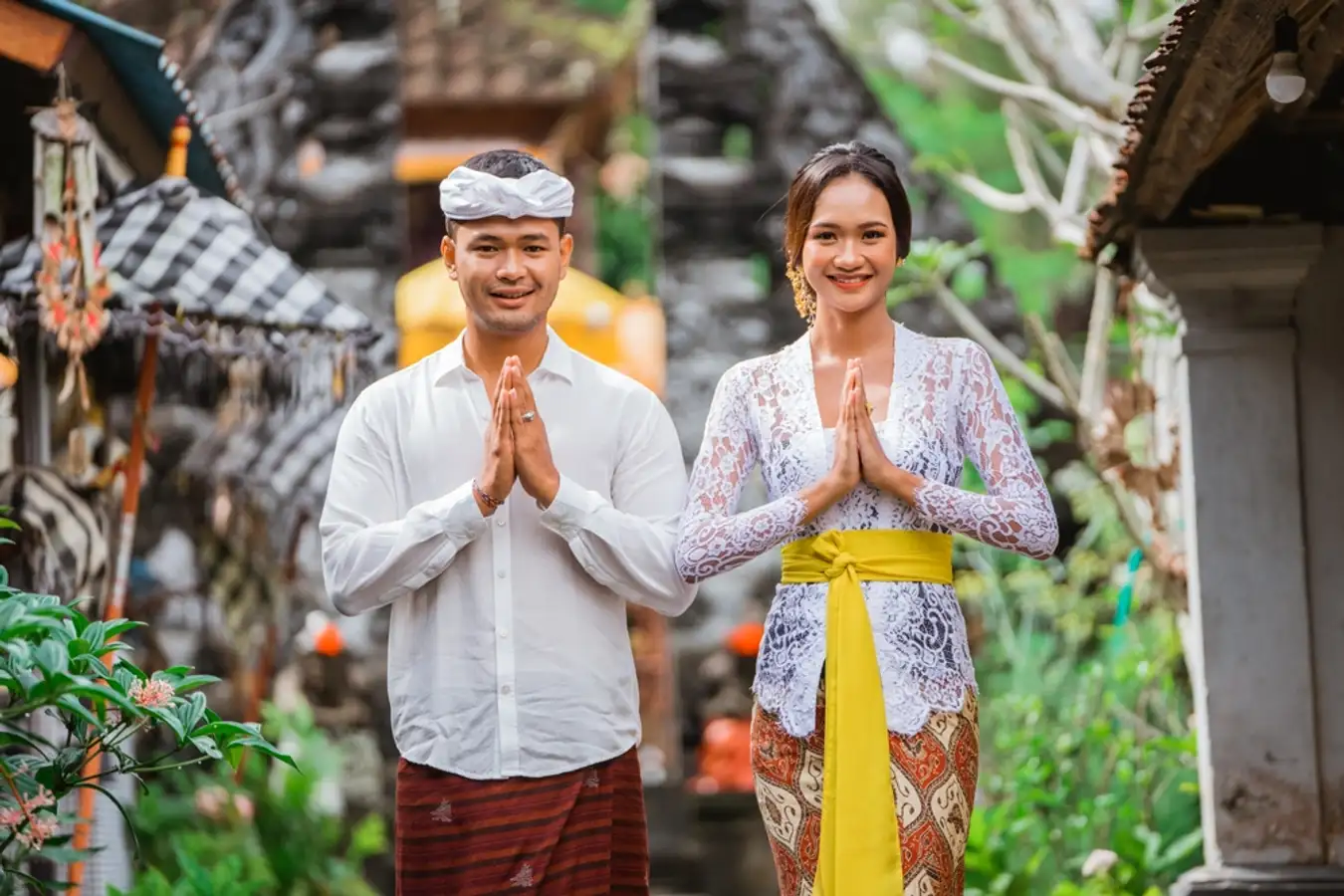
If you attend a ceremony, you might see locals wearing 'Kebaya' (lace blouse) and 'Udeng' (headcloth for men). While tourists aren't expected to go this full traditional route, making an effort to dress neatly (clean shirt, proper sarong) is noticed and appreciated by the local community.
Footwear is generally allowed in the outer courtyards ('Jaba Sisi'), but must strictly be removed when stepping onto the raised pavilions ('Bale') or entering the inner sanctum ('Jeroan') if invited. Look for the pile of shoes at the steps—that’s your cue.
2. Head, Feet, and Posture
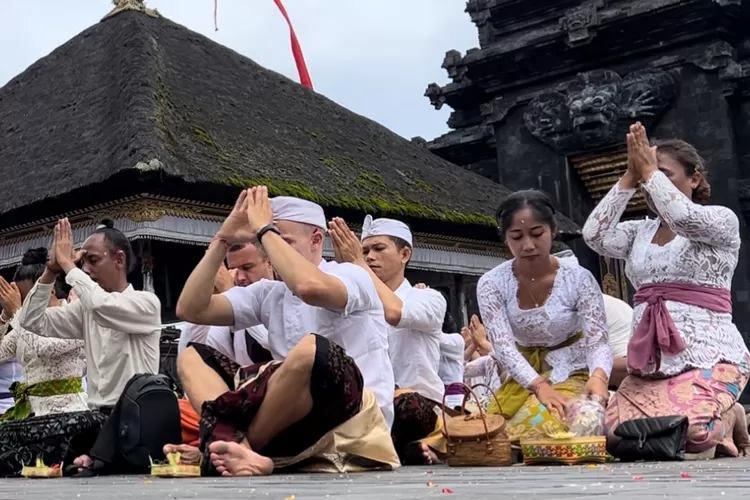
Balinese Hinduism places great importance on body hierarchy. The head is the most sacred part of the body, hosting the soul. Never touch a local's head, and this extends to statues of deities. Conversely, feet are considered impure as they touch the ground. Never point your feet directly at a shrine or altar when sitting. Sit cross-legged ('Sila') or kneel, covering your feet.
Position matters physically too. You should never stand higher than the priest ('Pemangku') or the offerings being blessed. If the priest is sitting, you sit. If you are taking photos, do not climb on walls or shrines to get a better angle. This is considered highly disrespectful.
Walking in front of people who are praying is a grave breach of etiquette. It breaks their concentration and connection with the divine. Always walk around the perimeter of the prayer area (behind the worshippers) if you need to move. If you must cross, do so bowing slightly and with a gesture of apology.
Volume control is essential. Temples are places of quiet contemplation. Loud laughing, shouting, or boisterous behavior disrupts the sanctity. Act as you would in a library or a church. If a ceremony is in progress (gamelan music playing), you can watch, but stay silent and on the sidelines.
Menstruation Taboo
This is the most sensitive rule. Women who are menstruating (and anyone with an open wound) are strictly forbidden from entering the temple. It is not discrimination; it is about blood being considered 'impure' in the spiritual sense, which can attract negative spirits. Please be honest and wait outside; locals believe breaking this can bring bad luck to the village.
3. Special Considerations for Women

Aside from the menstruation taboo mentioned above, women (and men) should be aware of hair etiquette. In serious ceremonies, loose hair is sometimes frowned upon as it's seen as untamed. Tying long hair back is a simple gesture of neatness.
Public displays of affection (PDA) are inappropriate in temples. Kissing, hugging, or sitting on laps is reserved for private spaces. The temple is for platonic and spiritual devotion. Holding hands is generally fine, but keep it modest.
Nursing mothers are generally welcome, but should do so discreetly with a cover, usually in a side pavilion rather than the main prayer courtyard. The purity laws extend to childbirth; traditionally, new mothers are considered 'Sebel' (spiritually unclean) for 42 days after giving birth and cannot enter temples. If you are travelling with a newborn under 3 months, check if it's appropriate to bring them inside.
If you are pregnant, you are absolutely allowed and even encouraged to visit temples to pray for the baby's safety. However, always prioritize your comfort and hydration, as temple visits often involve steep stairs and heat.
Modesty in upper wear is strictly enforced for women. Avoid deep necklines or see-through fabrics. A sarong and a simple sash are meaningless if the top is revealing. Many temples provide a sash, but carrying a lightweight scarf in your bag is a pro traveler move to cover up shoulders instantly.
4. Photography Ethics
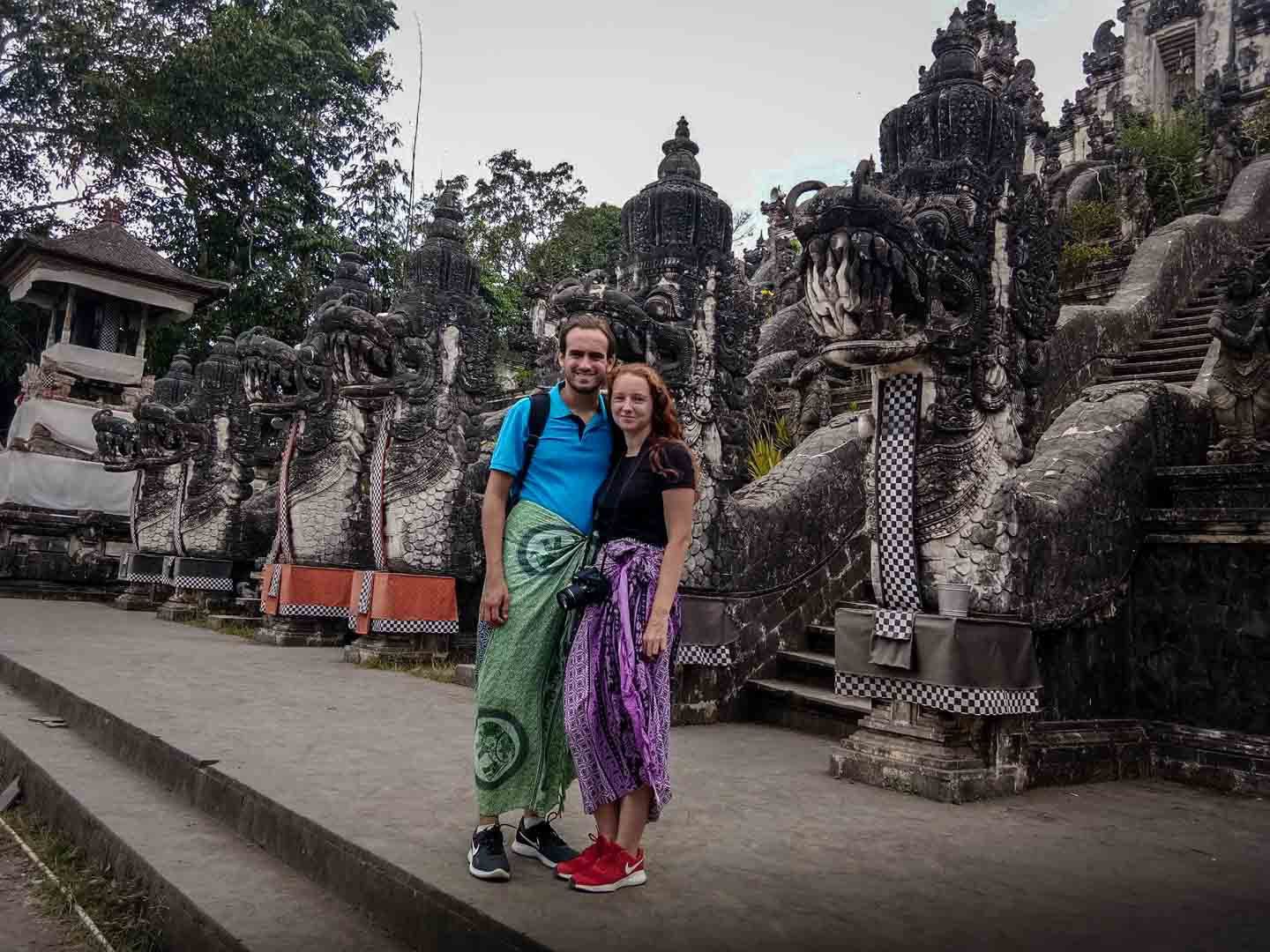
Bali is photogenic, and temples are its crown jewels. However, your camera should not be an intrusion. Do not stick your lens in the face of a praying person. Use a zoom lens to capture candid moments from a respectful distance. If a priest is performing a ritual, ask permission (gesture with your camera) or wait until he is finished.
Flash photography is disturbing during evening ceremonies or inside dark shrines. Turn it off. The natural candlelight creates a better atmosphere anyway. And never, ever stand directly in front of the 'Padmasana' (main lotus throne shrine) to take a selfie; that clear line of sight is for the gods.
Drones are increasingly banned at temples (like Tanah Lot or Uluwatu) without special permits due to noise and safety risks. Flying a buzzing drone over a silence ceremony is the quickest way to get evicted and fined. Keep the drone in the bag unless you have explicit clearance.
Selfies are fine in the outer courtyards, but avoid goofy poses, jumping shots, or yoga poses on temple structures. Treat the architecture with the reverence of a cathedral. Climbing on statues or walls for a 'better view' is sacrilegious and physically dangerous.
If you want a photo with a local, ask nicely. Most Balinese are happy to take a photo with respectful visitors. Showing them the photo afterwards on your screen is a great way to share a smile and bridge the language barrier.
Don't Get Soaked. Travel in Style!
Don't risk your safety on a slippery scooter. Enjoy Bali's tropical vibes comfortably with Bali Nusa Transport. Our fleet is ready to take you anywhere, rain or shine.